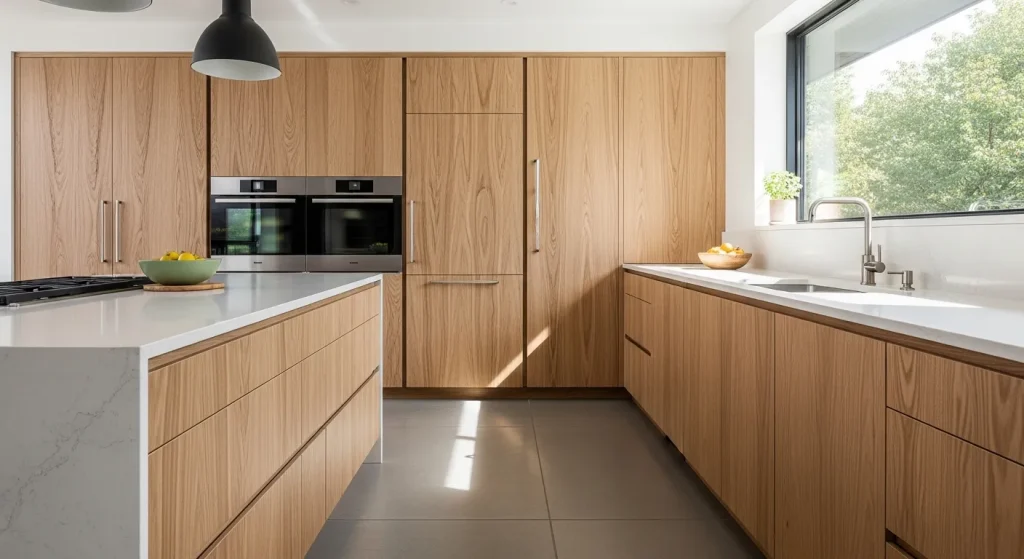
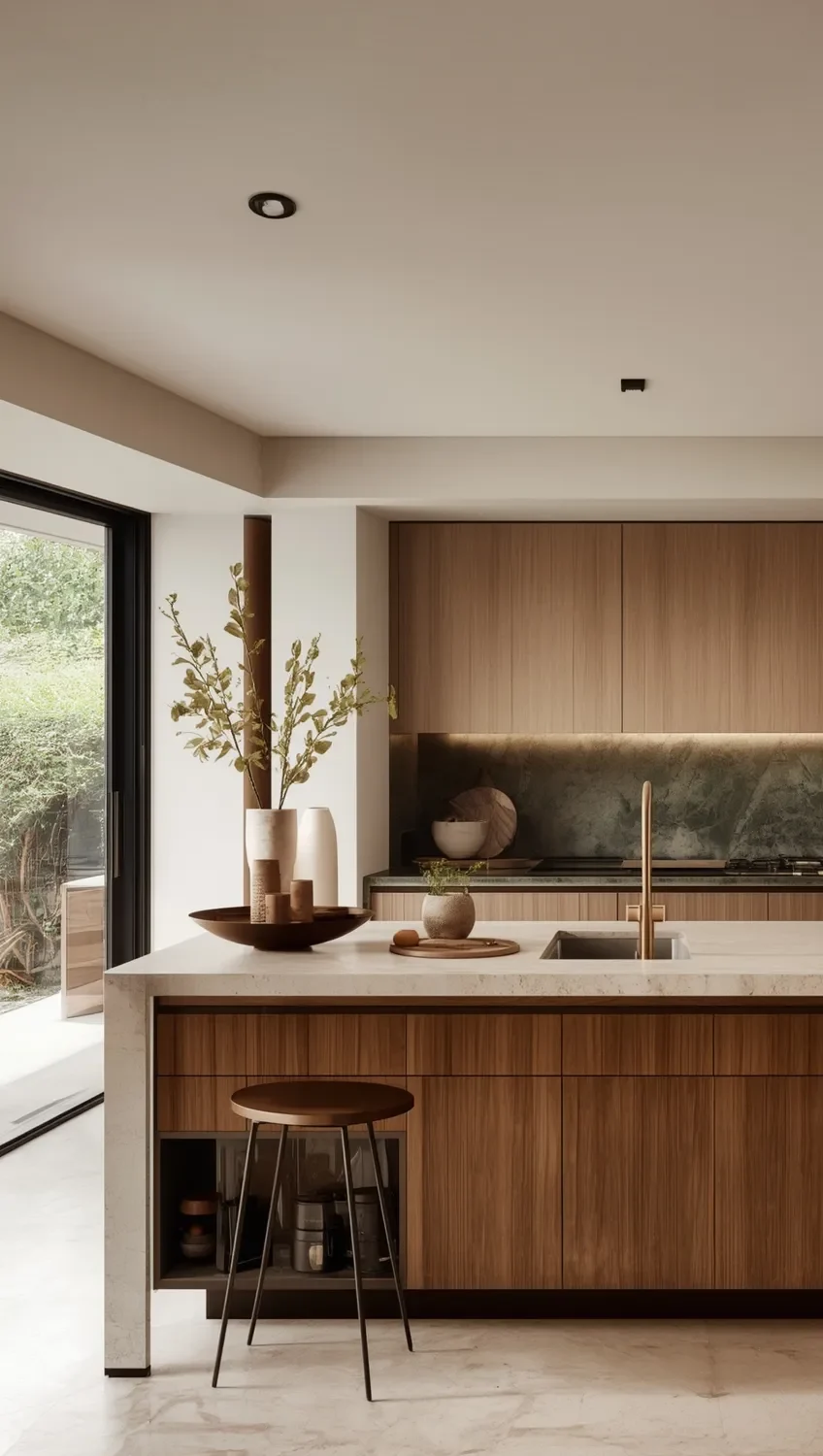
If you’re considering a kitchen remodel, you might have come across melamine kitchen cabinets as a trendy option. These cabinets offer a sleek appearance and come in a variety of colors and finishes, making them appealing for modern spaces.
However, like any choice in home design, they come with their own set of advantages and disadvantages. On one hand, melamine cabinets are known for their affordability and resistance to moisture, which can be a game-changer in a busy kitchen.
On the other hand, they may lack the durability of solid wood options and can be susceptible to chipping. In this article, we’ll explore the pros and cons of melamine kitchen cabinets, helping you make an informed decision for your kitchen renovation project
What Are Melamine Kitchen Cabinets?
Melamine kitchen cabinets are made by fusing melamine resin—a type of thermally fused laminate—onto a core like MDF or particleboard. These cabinets are known for their smooth finish, versatility, and low cost. You’ll often see melamine sheets for cabinets in both high-end modern homes and budget remodels.

Melamine sheets are pre-finished, meaning you don’t need to paint or treat them, which saves time and labor costs. Their appearance can mimic natural wood, giving your kitchen a luxurious look without the hefty price tag. These cabinets are a go-to option for those seeking a clean, uniform design.
Advantages of Melamine Kitchen Cabinets
Affordability — If you’re remodeling on a budget, melamine delivers a high-end appearance without draining your wallet. These cabinets cost significantly less than hardwood, making them attractive for rental properties and starter homes.
Moisture resistance. Unlike wood, melamine doesn’t absorb water easily, making it ideal for steamy or high-humidity kitchens. It’s also resistant to stains, which simplifies cleanup after spills or splashes.
With endless colors, textures, and finishes —from matte to high gloss—melamine gives you the freedom to match any modern kitchen style. It’s a great way to achieve a stylish, cohesive design without custom millwork costs.

Disadvantages of Melamine Kitchen Cabinets
Despite the benefits, melamine cabinets can be prone to chipping and edge damage, especially at corners or around handles. Once chipped, they’re difficult to repair cleanly, unlike wood, which can be sanded and refinished.
Melamine is also less heat-resistant than wood or metal, so it’s not ideal for areas near stoves or ovens without heat protection. If exposed to high temperatures or heavy impacts, the material may warp or crack.
Another drawback is weight—melamine cabinets with a particleboard core can be heavy and require strong hinges. If not installed correctly, they might sag over time, especially on upper cabinets.

Are Melamine Sheets for Cabinets Durable Enough for Daily Use?
Melamine sheets for cabinets are generally durable, especially in kitchens that don’t experience extreme wear and tear. Their hard resin coating makes them scratch-resistant under normal use. That said, sharp impacts or heavy weights can still cause surface damage.
The durability often depends on the core material—MDF provides better strength and resistance than cheaper particleboard. When paired with quality hardware, melamine cabinets hold up well for everyday cooking and cleaning.
They’re an excellent choice for busy kitchens that prioritize function and appearance. Just be mindful of their limits and consider corner guards or soft-close hardware to extend their life.

Melamine vs Other Materials: Which Is Best for You?
Compared to solid wood, melamine kitchen cabinets are far more budget-friendly and maintenance-free. However, wood cabinets offer better longevity and repairability if you’re aiming for a lifetime investment. Melamine’s sleek design fits modern aesthetics, while wood suits traditional or rustic styles.

Vs plywood, melamine is smoother and more customizable in appearance, but plywood is lighter and more structurally stable. Thermofoil is another alternative with similar looks but tends to peel over time, unlike well-sealed melamine sheets.

If you’re after affordable style with modern flair, melamine is a strong contender. But for kitchens with heavy use or resale value in mind, materials like wood or plywood might offer better ROI.
Cleaning and Maintaining Melamine Cabinets
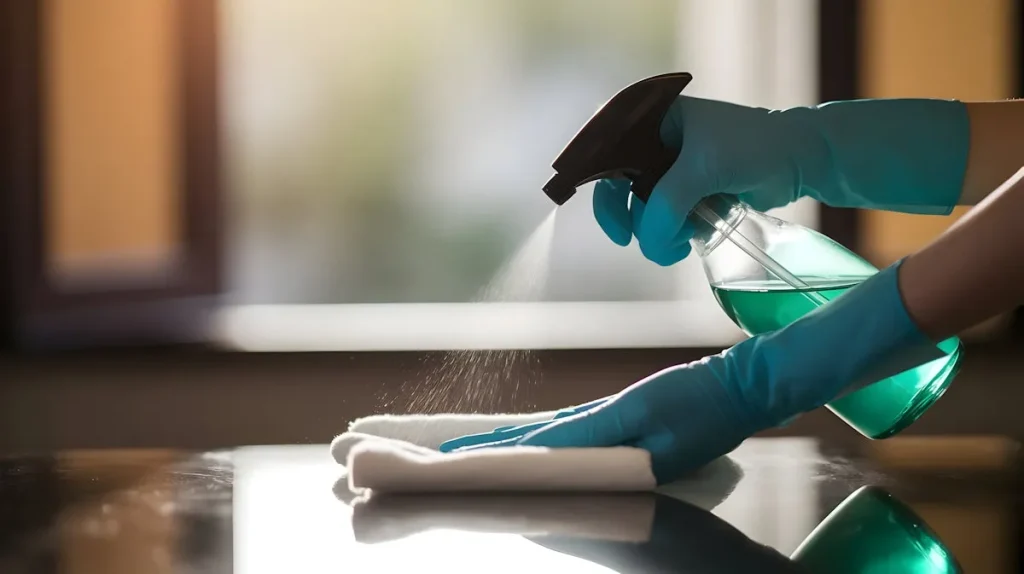
Melamine cabinets are very low-maintenance, which is one of their strongest selling points. A simple wipe with a damp cloth and mild detergent keeps them looking clean. Avoid abrasive pads or ammonia-based cleaners, which can damage the finish.
For grease buildup, a diluted vinegar solution works well without harming the surface. Be sure to dry the surface afterward to maintain its glossy or matte appearance. Regular cleaning prevents staining and extends the lifespan of your cabinets.
Maintenance is minimal, but prevention is key. Install soft-close doors and avoid slamming drawers to keep edges from chipping or delaminating over time.

Custom Melamine Cabinets in China: What to Know Before You Buy
Custom melamine cabinets from China offer unbeatable value—competitive pricing, bulk order flexibility, and fast lead times. Many factories provide full customization, including cabinet size, finish, and hardware options to fit your kitchen layout perfectly.
However, not all suppliers offer the same quality. Always request material samples and check if the core is MDF or particleboard. Ask about edge-banding, hardware brands, and moisture-resistance levels to ensure durability.
If you’re sourcing melamine cabinets internationally, partnering with a reliable manufacturer can save both money and time. This is especially true for large projects or developers looking for a full-house cabinetry solution.
Summary: Is Melamine Right for Your Kitchen?
Melamine kitchen cabinets offer a balance of affordability, style, and convenience, making them a popular choice for modern kitchen remodels. While they have some limitations—like potential chipping and heat sensitivity—their design versatility and easy care make them ideal for many homeowners.
Ready to upgrade your space with melamine cabinets? Reach out to explore design options, or let me help you connect with trusted suppliers who deliver custom solutions that last.
FAQs
Q: Is melamine a plastic or wood?
Melamine itself is a type of plastic resin, not wood. In melamine kitchen cabinets, this plastic coating is fused onto a wood-based core like MDF or particleboard using heat and pressure. So, while the surface is plastic for durability and design, the structure underneath is wood composite.
Q: What material is best for built-in cabinets?
The best material for built-in cabinets depends on your priorities. For durability and longevity, plywood or solid wood is ideal. If you’re looking for a budget-friendly and sleek solution, melamine cabinets offer excellent moisture resistance and a wide range of finishes. Use melamine with an MDF core for added strength in built-in installations.
Q: Can I paint over melamine kitchen cabinets?
Yes, you can paint melamine cabinets, but it takes extra prep. Because melamine has a slick, non-porous surface, you must sand it lightly, apply a special adhesion primer, and use high-quality paint like acrylic or enamel. Even then, painted melamine may not be as durable as factory finishes, so it’s not ideal for high-traffic kitchens.